
The one-sentence rule
If your garage door has been working fine all summer, give it one real inspection before the first soaking rain, because winter in the Inland Empire exposes weak points that dry heat never tests.
The exceptions: if your door is already sticking, if you hear new noises, or if your home is more than twenty years old with its original hardware, don't wait for a seasonal checklist — deal with it now, before the first storm finds the problem for you.
Why winter is different here
Rialto and the surrounding Inland Empire don't get brutal winters, but the shift from hot, dusty, dry months to winter rain is hard on a garage door system. Dust and fine debris that built up during wildfire-smoke season settle into tracks, rollers, and weatherstripping. Then the first rains come and that grit turns to grime, which binds moving parts right when cooler temperatures are already making steel springs and metal tracks contract and stiffen. A door that rolled smoothly in August can bind, groan, or hesitate in December for reasons that have nothing to do with the opener itself.
Start with the seals
The bottom seal and side weatherstripping are your first line of defense against wind-driven rain and standing water at the base of the door. Over a long dry summer, rubber seals crack, shrink, or pull loose from their track.
- Bottom seal: Press a flat tool or putty knife along the length of it. If it's stiff, cracked, or doesn't spring back, it won't seal out rain this winter.
- Side and top weatherstripping: Look for gaps you can see daylight through when the door is closed.
- Threshold seal: If your garage floor slopes toward the door or sits low, a threshold seal strip can stop water from pooling inside during heavy rain.
Replacement seals are inexpensive and most homeowners can swap a bottom seal themselves in under an hour, but if the track it sits in is bent or rusted, that's a different repair.
Lubricate before the rain, not after
Dust from dry months plus new moisture is a recipe for gritty, squealing hardware. Clean rollers, hinges, and the torsion spring with a dry cloth first to remove accumulated dust, then apply a silicone-based garage door lubricant — not household oil, which attracts more dirt. Do this before the rainy weeks start, since lubricant applied over wet grime does more harm than good.
Check the springs with cold in mind
Torsion springs lose a little tension as metal contracts in cooler temperatures, and a spring that was already near the end of its lifespan often fails in late fall or winter rather than summer. Watch for these signs:
- The door feels noticeably heavier when lifted manually
- The opener strains or makes a louder motor sound than usual
- Visible gaps in the spring coil, or a spring that looks stretched
Springs are under high tension and are not a DIY repair. If yours is showing age, replacing it before a cold snap is far better than having it snap during a storm when you need the door to open.
Protect the opener and sensors
Garage door openers have sensors near the floor on each side of the track that stop the door if something blocks the beam. Rain, mud splash, and condensation on the lenses can cause false stops or a door that won't close at all. Wipe both sensor lenses clean and make sure they're still aligned — a small bump from a parked bike or a ladder is often all it takes to knock one off.
If your opener has a battery backup, test it now. Winter storms occasionally bring power blips, and a backup that's been quietly dying for months is a bad surprise during a blackout.
Look at the panels and the slab
Small dents or rust spots that seemed cosmetic in summer become entry points for water once the rains start. Check especially near the bottom panel and any area where a mower or car bumper has nicked the metal. If your home has had earthquake retrofitting work done, it's also worth a glance at how the door track is anchored to the frame — movement in the structure can throw tracks slightly out of alignment over time, which shows up as a door that drifts to one side as it closes.
For garage-based workshops and businesses
If you run equipment, storage, or a small business out of a garage — common for commercial and detached garage setups in this area — a door that doesn't seal well costs you more in winter than a drafty feeling. Rain intrusion near electrical equipment or stored inventory is a real risk, and commercial-grade doors often have different seal and track specs than residential ones, so it's worth having them checked separately.
When to call Rialto Door & Opener
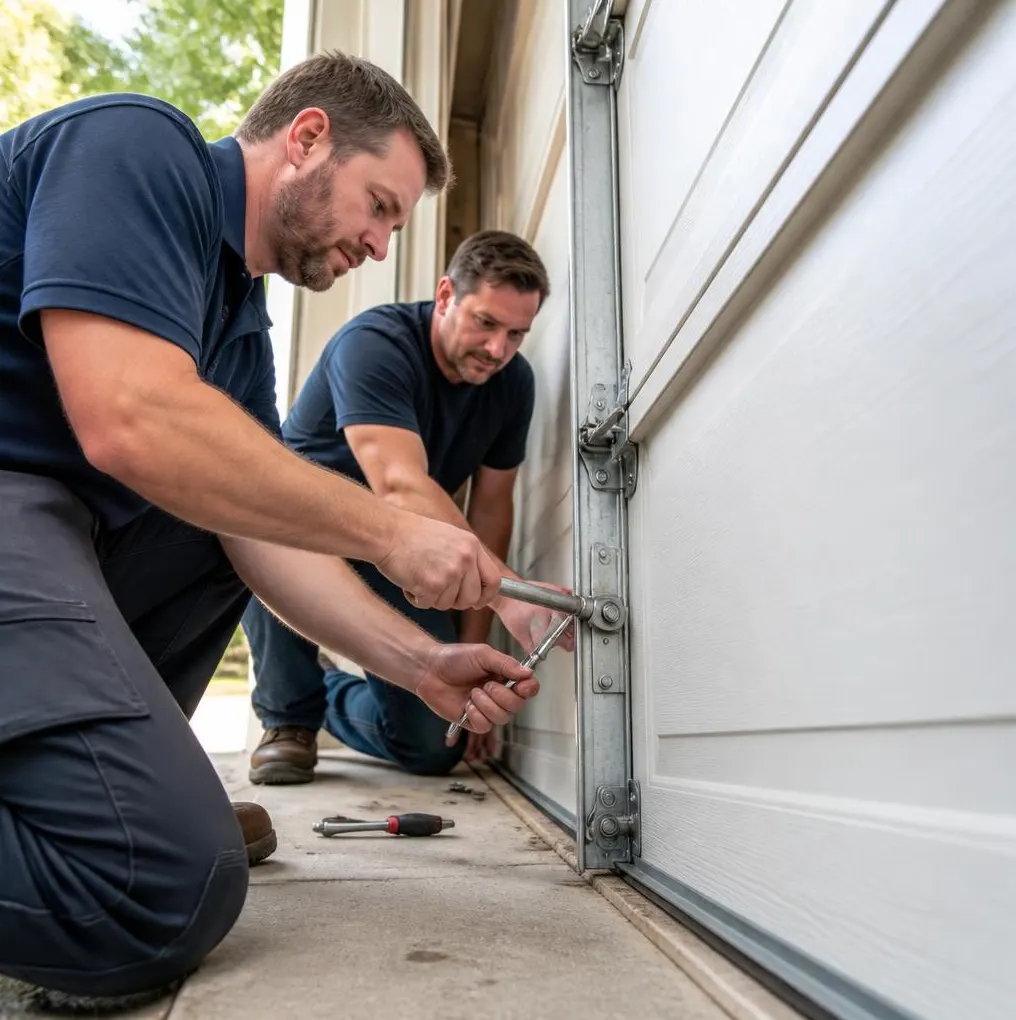
If you've checked the seals, cleaned and lubricated the hardware, and the door still sticks, drifts, or sounds off, that's usually a sign of worn rollers, a misaligned track, or a spring nearing the end of its life — not something lubricant will fix. Our Garage Door Maintenance visits cover a full inspection of springs, cables, rollers, and seals so you're not guessing which part is actually the problem. If a spring shows real wear or has already failed, our Spring Replacement service gets it swapped out safely, since torsion springs store enough force to cause serious injury if handled without the right tools.
Whether you're in Rialto, Fontana, Colton, or anywhere else in the Inland Empire, it's easier to fix a sticking door in November than to deal with a stuck-open or stuck-closed door during a December rainstorm. Call Rialto Door & Opener and we'll get your garage door squared away before winter really sets in.