
Rule of thumb: if your garage door only struggles in the early morning and loosens up once the sun's been on it for an hour, the cold itself isn't broken anything — it's just exposing a problem that was already there. Rialto doesn't get the kind of deep freeze that actually bonds steel to concrete, but on clear winter nights after rain, temperatures can dip close to freezing in low-lying spots like Bloomington or shaded, north-facing garages in the foothills toward Rancho Cucamonga and Highland. That combination — overnight rain followed by a cold snap — is the one real exception where a door can genuinely freeze to the slab, not just act stiff.
What It Looks Like When Cold Is the Trigger
- The door won't break free at the bottom. You hit the opener and hear the motor strain, but the panel doesn't move, or it pops loose with a crack and a flake of ice at the weatherstrip.
- The opener reverses or stalls. The motor tries, meets resistance, and the safety reversal kicks in before the door clears the floor.
- Everything moves, just slowly. The door lifts but drags, and the rollers sound gritty or squeal instead of gliding.
- It's fine by the afternoon. Same door, same remote, no issue once temperatures climb — a strong clue that thermal contraction or thickened lubricant is involved, not a structural fault.
What a Technician Checks, in Order
1. The Bottom Seal and Slab Contact
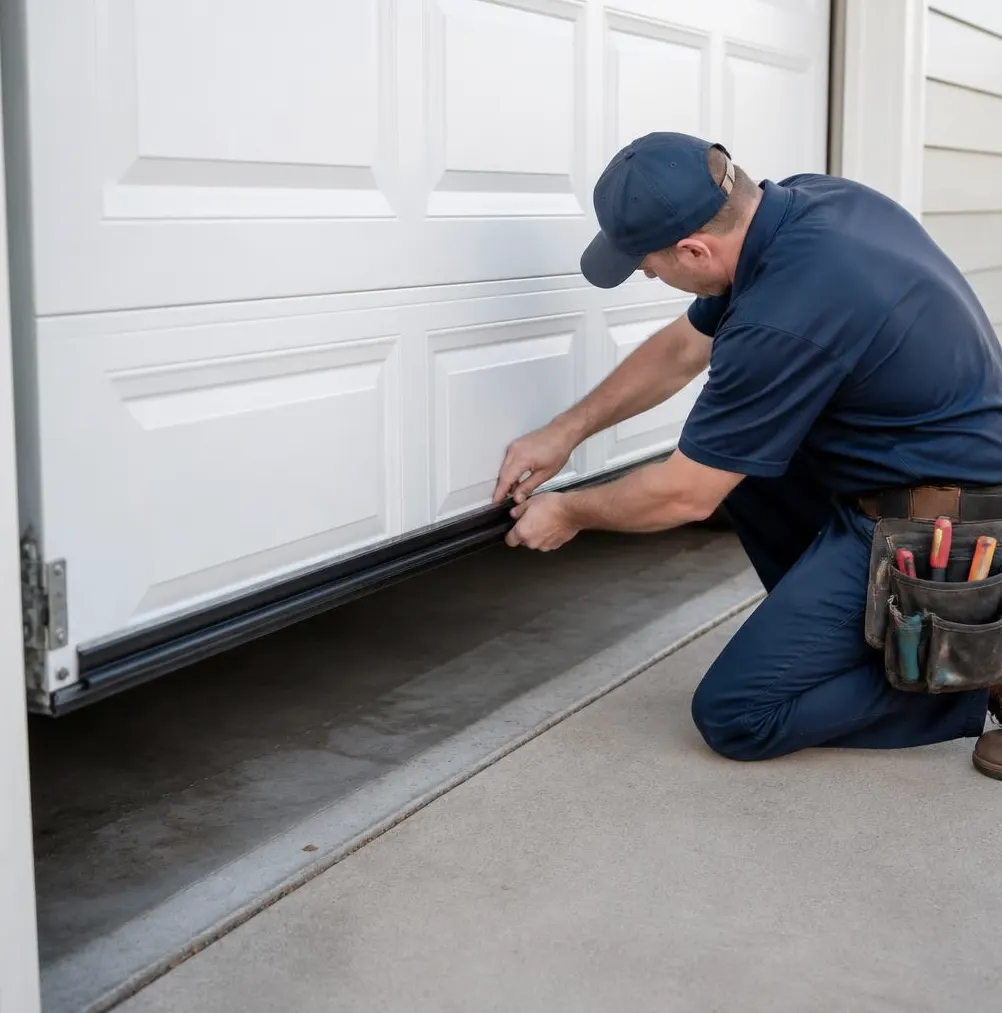
This is the first thing worth ruling out because it's the most obvious and the easiest to misdiagnose as a motor problem. If rain pooled under the door overnight and then froze, the rubber astragal seal can bond to the concrete. Forcing the opener in this situation strains the drive gear and can bend the bottom panel. The right fix is patience: a bucket of warm (not boiling) water along the seal line, or a space heater aimed at the threshold for a few minutes, breaks the bond without damage. If the seal is cracked, brittle, or missing chunks, it's not sealing out moisture in the first place — replacing it is a cheap fix that prevents the whole problem from recurring.
2. Lubrication on Rollers, Hinges, and Tracks
Grease and oil thicken as temperatures drop, and if the lubricant on your rollers and hinges was already old, dusty, or the wrong type, cold weather turns sluggish into stuck. This is especially common here because the dry season leaves a fine layer of dust on everything, and that dust mixes with old grease into a gritty paste that grabs instead of glides. The fix is straightforward: wipe the old buildup off hinges, rollers, and the track with a rag, then apply a lithium-based or silicone garage-door-specific lubricant — not WD-40, which is a cleaner, not a lubricant, and burns off fast.
3. Spring Tension
Torsion and extension springs are steel, and steel contracts slightly in the cold, which can shift the balance point of a door that was already running close to the edge of properly adjusted. A door that's hard to lift by hand, or that an opener strains to move even after lubrication, often has springs that need adjustment — or that were overdue for replacement anyway and the cold just revealed it. This is not a DIY repair. Garage door springs are under heavy tension, and adjusting or replacing them requires the right tools and technique to avoid injury.
4. Opener Force and Limit Settings
If the door is clean, lubricated, and balanced, but the opener still reverses or struggles, the force and limit settings may be dialed in too tightly for the extra resistance cold weather adds. These settings tell the opener how much effort to use before it assumes something is blocking the door and reverses for safety. A technician can recalibrate them so the opener compensates for seasonal stiffness without being so sensitive that it reverses on a door that's actually fine, or so loose that it keeps pushing against real resistance.
5. Track Alignment
Last on the list because it's the least likely cause but worth ruling out if everything else checks out: thermal expansion and contraction in the tracks or their mounting brackets can open small gaps or shift alignment slightly, especially on older installations. A door that binds in one specific spot every time, cold or not, usually points here rather than to the weather. Realigning the tracks and tightening the brackets is a routine fix, but it does require loosening and resetting hardware correctly so the door doesn't bind again in a different spot.
Why the Order Matters
Checking in this sequence — seal and slab, then moving parts, then springs, then opener settings, then tracks — starts with the cheapest and most obvious explanation and moves toward the ones that require real diagnostic work. It also avoids the common mistake of jumping straight to "replace the opener" when the actual issue was a frozen seal or gummed-up rollers that a cleaning and relube would have solved in twenty minutes.
When to Call Rialto Door & Opener
If you've cleared ice from the seal, relubricated the moving parts, and the door still fights you every morning, that's usually a balance or spring issue, and that's where we come in. Our Garage Door Maintenance service covers a full inspection of rollers, hinges, tracks, and spring tension so small seasonal stiffness doesn't turn into a bent panel or a burned-out opener motor. If the springs themselves are worn or undersized for the door, our Spring Replacement service resets the balance properly so the opener isn't doing extra work every time temperatures drop.
If your garage door in Rialto, CA is sticking, groaning, or stalling on cold mornings, give Rialto Door & Opener a call — we'll find out which of these it actually is and fix the one that matters, not just the symptom.